
New Car Incentives: How To Save

Decoding Dealer Incentives
Shopping for a new vehicle often feels simple until the pricing breaks down into rebates, APR offers, lease ads, and dealer discounts. For many buyers, understanding new car incentives is what turns a confusing ad into a smart purchase decision.
The right offer can lower your out-the-door price, reduce your monthly payment, or cut thousands in interest over the loan term. This guide explains how dealer incentives work, who qualifies, where to find current vehicle specials, and how to compare deals without missing the fine print. Learn more at Wiscasset Ford and browse our current specials online today!
What New Car Incentives Are and Why They Matter
A new-car incentive is an offer that reduces the cost of buying or leasing a vehicle. It may come directly from the automaker, a captive finance company, or from our dealership.
These offers usually appear as cash rebates, customer cash, bonus cash, APR financing, or lease specials. Some reduce the selling price directly, while others lower borrowing costs or create a more attractive advertised payment.
The difference matters because each incentive changes the deal in a different way. A factory rebate cuts the price, promotional APR reduces interest, and dealer incentives may add a local discount based on inventory clearance goals.
Incentives become especially important when MSRP rises, rates change, or supply tightens. A strong offer can make a Ford much more competitive from one month to the next.
Common Types of Vehicle Specials
Shoppers will often see customer cash, bonus cash, low APR financing, lease deals, loyalty offers, conquest offers, military rebates, and college graduate programs. Each one affects total cost, monthly payment, and eligibility requirements.
How Manufacturer Incentives Differ From Dealer Incentives
A manufacturer incentive usually comes from the automaker or its captive finance arm. These programs often include a factory rebate, special APR cash, special lease cash, or a national finance promotion for well-qualified buyers. Dealer incentives differ because they are set locally by each store. A dealer discount may reflect inventory levels, sales targets, aging stock, or a desire to beat nearby competitors on the same model. Regional offer structures also matter. A ZIP code offer can change what you see online, which is why one store may advertise a stronger deal than another on an identical vehicle trim.
Factory Offers vs. Local Dealer Specials
Factory incentives come directly from the manufacturer and are often available nationwide, while regional programs may vary by market. Our dealership also offers local specials based on inventory and seasonal promotions. In many cases, these dealer discounts can be combined with manufacturer incentives, and our team will help you identify the best combination to maximize your savings.
The Main Types of New Car Incentives You Will See
Most new vehicle specials fall into a few familiar categories. The key is knowing whether the offer lowers the purchase price, reduces finance charges, or simply changes the payment structure. Some incentives can be combined, while others are mutually exclusive. A buyer may have to choose between a cash rebate and a promotional APR, especially when 0% APR financing is involved.
Cash Rebates and Customer Cash
A cash rebate is a direct discount applied to the transaction. Customer cash, factory rebate, and bonus cash all reduce the amount financed or the final purchase price. Variations include loyalty rebate offers for current owners and conquest cash for buyers switching brands. These can be valuable, but they often require proof of current registration or ownership.
Low and 0% APR Financing Offers
APR financing promotions reduce the loan’s interest rate. A low rate or 0% APR financing can save a buyer more than a rebate when the loan amount is large and the term is long. These deals usually require strong credit scores and lender approval. In many cases, only well-qualified buyers receive the advertised rate.
Lease Specials
A lease special promotes a low monthly payment for a set term. The ad may look attractive, but it often includes a required down payment, mileage limits, and fees due at signing. Buyers should compare the total lease cost, not only the payment. Lease cash and special lease cash can improve the deal, but they do not erase end-of-lease obligations.
Targeted Incentives
Targeted programs include a military rebate, a first responder discount, a college graduate rebate, and mobility assistance. These offers require proof of eligibility and may be limited to certain models or financing methods.
How to Read a Vehicle Special Without Missing the Fine Print
The headline number in a vehicle ad rarely tells the full story. Fine print explains the expiration date, model year, vehicle trim eligibility, financing assumptions, and whether the offer applies only at participating stores. It is also important to check whether promotions are stackable incentives or an either-or choice. That single detail can change the deal’s real value by a wide margin.
Important Fine-Print Terms to Check
Review residency restrictions, ZIP code targeting, credit tier rules, down payment assumptions, and dealer participation language. Also, confirm whether the ad applies to the exact trim, drivetrain, and model year you want.
Rebate or Low APR Financing: Which Incentive Saves More
At our dealership, we help customers look beyond the monthly payment and focus on what really matters: the total amount paid over time.
Some offers include a larger cash rebate, which immediately lowers the amount you finance. Others feature a low promotional APR, which reduces the interest you pay throughout the life of the loan. Both can be valuable, but the better choice depends on several factors, including your loan term, credit profile, amount financed, and current bank or credit union market rates.
For example, if you secure a short-term loan or a competitive rate through outside financing, the rebate may deliver greater overall savings. In other cases, the low APR option may reduce the total cost of the loan.
That’s where our team comes in. We’ll walk you through both options and help you compare them clearly so you can see which path saves you more. You can also use our online auto loan calculator to enter the vehicle price, rebate amount, APR, and loan term to view the total cost side-by-side.
Our goal is simple: help you choose the incentive that truly saves you the most.
When a Rebate Makes More Sense
A rebate often wins when the cash discount is large and outside financing is already competitive. It can also be better for buyers who make a larger down payment or use a strong trade-in value to reduce the balance.
When Promotional APR Makes More Sense
A promotional APR can be more favorable when you finance a large amount over a long period. On expensive SUVs, trucks, and EVs, 0% APR financing or a very low rate may beat a modest rebate by a wide margin.
How Lease Incentives Work
Lease incentives are built around several moving parts, not just the advertised payment. The most important factors are the money factor, residual value, cap cost reduction, lease term, and any lease cash applied to the deal.
A high residual value usually lowers the monthly payment because the vehicle is expected to retain more value. A lower money factor also helps, since it reduces the finance charge in the lease calculation.
Many low-payment ads require a significant cash down payment at signing. That cap cost reduction may make the monthly number look better, but it increases your upfront cost and can hide the real value of the lease special.
Lease Terms That Affect Real Cost
Check the mileage allowance, acquisition fee, wear-and-tear standards, and disposition fee. Also review what happens at lease end, including excess mileage charges and any purchase option terms.
Who Qualifies for New Car Incentives
Not every offer is open to every shopper. Many incentives depend on credit score, lender approval, current brand ownership, military status, student status, employment, or geographic location.
That is why two buyers can ask about the same make and model and receive different pricing. One may qualify for loyalty or conquest programs, while another may only be eligible for the basic manufacturer incentive.
Preparation helps avoid surprises at the dealership. Gather documents before you visit so the store can verify eligibility quickly and quote the right numbers. Our goal is to make sure you receive every incentive you qualify for, with clear, transparent numbers from the start.
Typical Eligibility Requirements
Common documents include current loyalty rebate registration, proof of competing brand ownership for conquest cash, military ID for a military rebate, diploma or transcript for a college graduate rebate, and financing approval for APR offers. Some programs also require proof of residence, employment, or insurance.
The Best Time to Shop for Dealer Specials
At our dealership, timing can make a great offer even better. Certain times of the year naturally create stronger opportunities for savings, and our team works hard to bring customers the most competitive specials when those moments arrive.
For example, month-end and quarter-end are often when dealerships introduce some of their strongest incentives as sales teams work to reach important targets. You’ll also see exciting promotions during major holiday sales events, when manufacturers and dealerships collaborate to offer limited-time deals.
Another excellent time to shop is during a model year changeover. When the next model year begins arriving on our lot, we often increase discounts on remaining inventory to make room for new arrivals and help customers secure exceptional value.
Because incentives and manufacturer programs change frequently, some offers may appear, update, or expire from week to week. If you’re getting close to purchasing, our team can help you track the latest specials and notify you when the timing is right, so you don’t miss a great opportunity.
Why Leftover Inventory Can Offer Better Value
Leftover inventory often carries larger rebates, APR specials, or dealer markdowns. If the changes between model years are minor, an older model year can deliver better value with similar features and a lower selling price.
How to Compare New Vehicle Specials Across Brands
A smart comparison goes beyond the ad headline. Look at the out-the-door price, APR, monthly payment, loan term, down payment, and likely total cost of ownership.
A larger rebate on one vehicle may still be lost to a lower-interest deal on another. That is especially true when comparing sedans, trucks, hybrids, electric vehicle incentives, and SUV deals across brands.
Resale and financing flexibility also matter. A lower payment on a long-term loan can cost more overall, while a slightly higher payment on a shorter-term loan may build equity faster.
Questions to Ask Before Choosing a Deal
Smart shoppers often ask important questions before committing to a vehicle offer—like whether an incentive applies to the exact trim they want, if it can be combined with trade-in discounts, or when the promotion expires. It’s also wise to confirm whether a quote includes taxes, fees, dealer add-ons, and any required conditions.
At our dealership, you don’t have to figure this out on your own. Our team walks you through every detail of your offer, answers your questions clearly, and provides a full breakdown of pricing and incentives. We make sure you understand exactly how your deal works, so you can move forward confidently, knowing there are no surprises along the way.
Mistakes Shoppers Make With Car Incentives
One of the most common mistakes is focusing only on the monthly payment. A low payment can come from a longer loan term, a large down payment, or a lease with strict mileage limits rather than true savings. Another mistake is assuming every listed discount applies automatically. Many ads include loyalty rebates, conquest cash, or targeted programs that only a narrow group can claim. Buyers also miss costs hidden outside the incentive itself. Fees, add-ons, financing markups, and weak trade-in value can erase the benefit of a strong rebate.
No Guesswork. No Surprises. Just Straightforward Offers.
Many promotional ads in the auto industry can include unusually high due-at-signing amounts, limited trim eligibility, or discounts that depend on hard-to-qualify-for bonuses. That’s why shoppers are often encouraged to read the fine print carefully and ask for a full written breakdown. At our dealership, you don’t have to stress about sorting through confusing offers. Our team walks you through every detail clearly, from incentives and eligibility to upfront costs, so you know exactly what’s included and what you truly qualify for. No hidden conditions, no complicated fine print, just transparent pricing and straightforward guidance you can trust.
A Simple Process for Choosing the Right Incentive
Start by choosing the exact model, trim, and model year you want. Once you’ve found your ideal vehicle, our team will help confirm which rebates, financing offers, and exclusive programs you may qualify for before you even step into the dealership.
Next, compare your savings options. Use our online auto loan calculator to see how a rebate stacks up against low-APR financing. If leasing interests you, we’ll walk you through key details like the money factor, residual value, mileage allowance, and upfront costs so you can choose with confidence.
When you’re ready, get pre-approved online in just a few minutes, making your visit faster, easier, and focused on driving home in the vehicle you love.
Checklist Before Visiting Our Dealer
Bring financing quotes, a trade-in estimate, proof for targeted incentives, your driver’s license, insurance details, and any registration documents needed for loyalty or conquest offers. Finding the right incentive doesn’t have to be complicated when you have the right team on your side. At our dealership, we’re here to guide you through every option, explain the details clearly, and help you take advantage of every rebate, finance offer, or special program you qualify for.
Start your journey today at Wiscasset Ford by exploring our inventory, using our online tools, or getting pre-approved in minutes. Then visit our dealership and let our team help you turn the perfect incentive into the perfect deal on your next vehicle!
FAQs
Can anyone qualify for 0% APR financing on a new car?
Usually not. These offers are typically reserved for well-qualified buyers with strong credit, and approval can vary by lender, model, term, and region.
What is the catch with 0% APR financing offers?
The tradeoff is often giving up a cash rebate or other discount. The offer may also be limited to select trims, shorter terms, or top credit tiers.
Should I take a rebate or a low APR car deal?
It depends on the rebate amount, the amount financed, your credit profile, and the loan term. Compare the total paid under each option before deciding.
How big should my down payment be on a new car?
A larger down payment lowers the amount financed and can reduce monthly costs. The right amount depends on your budget, trade-in equity, and whether keeping cash on hand matters more.
What is the true cost of a new car incentive deal?
It includes the selling price, taxes, fees, interest, required down payment, and any conditions tied to the offer. For leases, include mileage limits, fees, and end-of-term charges.
The best incentive is not always the biggest number in the ad. The strongest deal is the one that fits your credit, driving needs, budget, and long-term ownership plan.
Contact our team at Wiscasset Ford to determine which of our new car incentives fit your budget today!
Lease Or Buy Used? Make The Right Choice

Smart Used Car Financing and Leasing Decisions
Deciding whether to lease a new car or buy used is one of the most important financial decisions in car buying today, especially in a competitive car market. At Wiscasset Ford in Wiscasset, ME, many car buyers come in weighing their personal finance goals against daily driving needs and wondering whether to lease a new car or buy used for their next vehicle. The choice affects your monthly car payment, how long you keep the vehicle, and what kind of flexibility you have when it is time for your next car.
When you think about whether to lease a new car or buy used, you are really choosing how you want to pay for a vehicle over the long term and how much control you want over car ownership. Maybe you want lower monthly payments so you can free up cash for other financial decisions, or you are willing to take on higher monthly payments for a shorter period so you own the vehicle outright for a long time. Either way, Wiscasset Ford in Wiscasset, ME, can help you compare the pros and cons of leasing new or buying used so you feel confident you are making the right choice.
How Leasing New And Buying A Used Car Differ
For many drivers in Wiscasset, ME, the first step is understanding leasing a new car vs. buying a used car in simple terms. When you lease or buy used, you either pay to use the new car for a set lease term or pay toward full car ownership. With a lease agreement, you are essentially paying for the new car’s value that you use during the lease period, plus a money factor that functions similarly to an interest rate. Your monthly lease payment is based on the vehicle’s depreciation during the lease term, its residual value at the end of the lease term, and your credit score.
Leasing new tends to provide low monthly payments or lower monthly payments than a comparable used car loan, which is why many car buyers ask if they should lease new or buy used when they want a newer vehicle or even an electric vehicle with advanced safety features. Your lease contract and terms will spell out details such as mileage restrictions, what constitutes excessive wear, and any fees at the end of your lease term. At the end of the term, you usually decide whether to return the leased car, buy the leased vehicle for its residual value, or move into your next vehicle.
Buying works differently. When you choose to take out a used car loan, your loan payments are based on the sale price of the used vehicle, your down payment, the interest rate, and any finance charges. Over time, you build equity, and once the loan balance is paid off, the car’s value, resale value, and cash value all belong to you. Instead of thinking only in terms of leasing vs. short commitments, you are planning for longer-term use and full car ownership.
Financing Options And Where You Get Your Loan
Whether you lease new or buy used at Wiscasset Ford, how you finance the deal matters. For a purchase, you can work directly with our finance center, apply through a credit union, or check rates with your bank. Your credit score influences your interest rate, loan term options, and the total finance charges you pay over time. Some drivers roll fees and taxes into the used car loan, while others prefer to pay them upfront with a credit card or cash to keep loan payments lower.
Leases have their own structure. Leasing terms usually require the first month’s payment due at signing, along with fees. Your lease agreement details how the money factor and residual value are calculated and what happens at the end of the lease term. If you want to move into a different vehicle at the end of the term, leasing new can make it easier to change cars without worrying about trading in an old car, selling to a third-party buyer, or negotiating a car’s worth on your own.
Why A Used Vehicle Can Work For Your Budget
One of the biggest reasons drivers in Wiscasset, ME, ask whether to lease new or buy used is the value a used vehicle can offer. A new vehicle takes its largest hit in value during the first few years on the road, which is why a vehicle’s depreciation is such an important part of the conversation. When you focus on a quality used vehicle, that early drop has already happened, which often means a good deal on the purchase price based on a lower starting car’s value.
If you keep the car for a long time, buying can maximize trade-in value and resale value later, especially when the vehicle stays in good condition and has a reasonable number of miles for its age. For shoppers thinking about fuel economy, an electric vehicle or efficient gas model can reduce long-term fuel costs, especially over a longer-term ownership plan. When you weigh whether to lease new or buy used, remember that maintenance costs and repair costs also play a role. Depending on the vehicle, you may still have a manufacturer warranty or an extended protection plan available, which can help manage future expenses and keep your personal finance goals on track.
Buying A Used Car For Long-Term Value
If you want to keep your vehicle for a long time and drive without thinking about mileage restrictions, buying a used car can be a strong path forward. When you buy used and choose the purchase route, your higher monthly payments early on are building ownership and equity. Once the loan balance is gone, you have a paid-off vehicle you can drive for a long time with no loan payments at all. That freedom appeals to many drivers focused on long-term financial decisions.
Buying also gives you more flexibility in how you use the vehicle. You can customize the interior, install accessories, and use the car as you like without worrying about excessive wear penalties in a lease agreement. Over time, you control how you manage the vehicle, whether you keep it as an extra old car for backup, use it as a trade-in value toward your next car, or sell it for cash value. For many, purchasing becomes the right choice over any leasing or buying used question.
Cost Of Ownership vs. Cost Of Leasing
To decide whether to lease new or buy used, it helps to compare the total cost of ownership against the total lease cost. Leasing often focuses on keeping your monthly car payment lower. You might see low monthly payments promoted heavily, and for good reason: they can free up money month to month. However, when the lease period ends, you either return the vehicle or buy it for its residual value, which may mean starting a new loan or another lease.
With a purchase, your monthly car payment may be higher at first, but once the loan term ends, you own the vehicle outright. You can drive it for years with no lender involved while still benefiting from its car worth if you decide to sell. Maintenance costs and repair costs become your responsibility, particularly after the manufacturer’s warranty runs out, but you also get full control over car ownership decisions. We can help you model how different loan term options and used-car loan structures affect your monthly payment and total paid over time.
How Lifestyle And Driving Habits Affect Your Decision
Your day-to-day routine in Wiscasset, ME, should also influence whether you lease new or buy used. If you drive short distances, work from home, or mainly commute locally, lease terms with mileage restrictions might still fit well. Drivers who always enjoy having a newer vehicle with up-to-date safety features and technology often lean toward leasing new, especially when they see a good deal that lines up with their personal finance goals.
On the other hand, if you take frequent road trips, have a long commute, or simply like to keep a vehicle for a longer-term stretch, buying can eliminate worries about mileage limits or lease-end charges. For some, especially those who plan to keep their next vehicle for a long time, the pros and cons of leasing become less attractive compared with owning and driving the same car for many years. Wiscasset Ford can help you compare leasing new vs. buying a used car with real numbers so you see how each path affects your overall budget.
Getting Expert Help At Our Dealership
You do not have to figure out whether to lease new or buy used on your own. The team at Wiscasset Ford in Wiscasset, ME, works with car buyers every day who are comparing leasing new vs. purchasing used, weighing loan payments, and trying to choose between short commitments and long-term ownership. Our finance specialists can explain leasing terms in detail, from how your money factors are calculated to what happens at the end of your lease term, and can also walk you through used car loan options from our lender network and local partners like your preferred credit union.
When you sit down with the experts at Wiscasset Ford, you can review your credit score, discuss whether using a credit card for certain fees makes sense, and look at different scenarios around a vehicle’s depreciation, trade-in value, and a car’s value over time. We will help you see how loan balance, lease period, and end of the term choices affect your overall plan, so whether you decide to lease new or buy used, you feel informed and in control. If you are ready to explore car lease deals, review leasing offers, or simply talk through options for your next car in good condition with strong fuel economy, Wiscasset Ford is here to help you find a great deal that fits your needs.
Are New Cars Safer? Why You Should Buy New
Modern Vehicle Safety For Shoppers
When drivers visit Wiscasset Ford, they often arrive with one big question in mind: are new cars safer than the vehicles they already own? That concern usually starts with a comparison of old-car vs. new-car safety and quickly expands into a broader look at car safety as a whole. Anyone who has spent years driving an older vehicle has felt that moment of doubt in traffic, wondering whether newer cars would handle a sudden stop or near miss more confidently. It’s only normal to ask “Are new cars safer?” when family, commute time, and changing driving conditions are all on the line.
Over the last few decades, car manufacturers have transformed automotive safety through smarter vehicle design, updated safety standards, and continuous safety improvements. Agencies such as the National Highway Traffic Safety Administration and the Insurance Institute for Highway Safety collect large amounts of crash-test data, run detailed crash tests, and track driver crash rates and fatality rate trends to see whether new cars are getting safer. Their findings show that new, safer vehicles can reduce fatal crashes and serious injuries among car occupants and other road users. That evidence matters when you are standing in the showroom at Wiscasset Ford in Wiscasset, ME, and quietly wondering whether to upgrade to a new car.
How Modern Vehicle Design Protects You
One of the biggest changes you will notice when comparing older cars with modern cars is how crash forces are managed. Today’s new vehicles are built around carefully engineered crumple zones that absorb impact and redirect energy away from the passenger compartment. These areas are designed to deform in a controlled way, helping to keep the cabin more stable and lowering crash risk in many types of car accidents. For motorists who have always relied on older models, it is reassuring to see how much work has gone into answering the question of whether new cars are safer in real-world collisions.
Inside the cabin, newer vehicles use high-strength steel, smart vehicle design, and well-placed reinforcements in the roof, floor, and doors. The steering column and steering wheel are designed to move or collapse in specific ways, while side curtain airbags deploy to help shield heads in side impacts and rollovers. Combined with three-point seat belts, anti-lock brakes, and electronic stability control, these safety systems are all focused on keeping car occupants away from the most dangerous forces. Even a midsize car or small SUV can offer impressive crash safety when engineers prioritize both highway safety and overall road safety. For many shoppers at Wiscasset Ford in Wiscasset, ME, this structure-focused view goes a long way toward answering whether new cars are safer than what they parked at home.
Crash Testing, Data, and Safety Standards
The structural changes you see in the showroom are shaped by what researchers see during crash testing. Organizations like the National Highway Traffic Safety Administration and the Insurance Institute for Highway Safety run a wide variety of crash tests, from frontal and side impacts to rollovers and specialized test procedures at high speed. These evaluations help determine how each passenger vehicle protects car occupants and how different vehicle classes stack up on traffic and highway safety charts. When engineers review this data and redesign models for a new model year, they are responding directly to the ongoing question of whether new cars are safer according to the numbers.
In addition, insurance companies and regulators use this information to reward safer vehicles and encourage ongoing safety improvements. They look closely at driver death rates, fatal crashes, and how older vehicles compare with newer vehicles when impacts occur at real-world speed limit ranges. Results can vary depending on vehicle choice and design, and whether a model is a large SUV, pickup truck, small car, or other large vehicle. Heavier vehicles sometimes perform differently in certain crashes because of curb weight, which is why comparing cars for safety means looking beyond age and focusing on design. As you explore inventory at Wiscasset Ford in Wiscasset, ME, we can help you explore whether new cars are safer for the specific kind of driving you do.
Modern Safety Systems and Crash Avoidance Technologies
Beyond strong structures, new cars shine in the advanced safety systems they offer. Features such as Forward Collision Warning and Automatic Emergency Braking can help you react more quickly when traffic slows suddenly. Many modern cars blend these tools into broader crash avoidance technologies that support crash prevention rather than just crash response. For drivers who remember their first car having little more than seat belts and basic brakes, the leap in capability makes it very reasonable to ask whether new cars are safer in the moments that matter most.
Electronic Stability Control and anti-lock brakes help maintain control in sudden maneuvers, while Lane Departure Warning, Lane Keep Assist, and Blind Spot Warning assist with lane changes and longer trips. Adaptive Cruise Control automatically adjusts speed to follow traffic more smoothly within the speed limit, easing fatigue on the highway and supporting highway safety for everyone. These systems are not limited to luxury cars anymore; many mainstream models include them as standard or widely available equipment. When you experience these technologies on a test drive at Wiscasset Ford in Wiscasset, ME, you may find your answer to whether new cars are safer shifting as the vehicle quietly helps manage tricky driving conditions.
Everyday Driving Experience and Visibility
Modern vehicles also support safety by helping you stay focused. Clean dashboard layouts, intuitive controls, and clear digital displays keep your attention on the road instead of buried in menus. Voice commands allow you to adjust settings without taking your hands off the steering wheel, while thoughtful cabin design makes it easier to monitor mirrors and surroundings. Compared with older cars and older vehicles that were never designed around distraction concerns, many shoppers feel more confident answering whether new cars are safer once they have spent time in a modern cabin.
Low-speed situations matter too. A crowded parking lot or tight driveway can hide pedestrians, pets, and obstacles in blind spots. Cameras, parking sensors, and other parking aids improve pedestrian safety and reduce the risk of minor bumps or fender benders. These tools are especially helpful in larger vehicles and heavier vehicles, where visibility can be more challenging. As these technologies quietly prevent incidents day after day, they offer practical evidence that proves to drivers that new cars are safer, not just theoretically, but something they can experience routinely.
Balancing Size, Segment, and Safety Priorities
Choosing the right vehicle means balancing safety with everyday needs like space, style, and fuel efficiency. Some drivers feel most comfortable in a large SUV or pickup truck, while others prefer the agility and fuel economy of a small SUV or a compact passenger vehicle. The good news is that strong automotive safety is available across many segments, as long as you pay attention to crash test ratings, crash tests, and available safety systems, rather than focusing only on looks. Working with the team at Wiscasset Ford in Wiscasset, ME, gives you a chance to review the data and ask whether new cars are safer for your family, even if you move to a different size or body style.
See Today’s Safety Advances
The most convincing way is to see and feel the differences in person. At Wiscasset Ford in Wiscasset, ME, you can explore new vehicles alongside carefully selected older pre-owned vehicles. Staff can walk you through safety standards, explain how specific safety systems work, and show you how features like Forward Collision Warning, Adaptive Cruise Control, Lane Departure Warning, Lane Keep Assist, and Blind Spot Warning work together. Once you watch these tools in action, it becomes easier to decide for yourself whether new cars are safer for your daily routes.
You can also review safety labels, ask about recent crash tests, and learn how car manufacturers respond to each new IIHS test and regulatory change. Whether you are comparing small SUVs, a midsize car, a family-focused large SUV, or a capable pickup truck, the team can outline how each model’s safety systems and safety standards support road and traffic safety in and around Wiscasset, ME.
Visit Wiscasset Ford to Explore Safer Vehicles
When you are ready to move from research to real-world experience, visit Wiscasset Ford and take a closer look at today’s safer vehicles. Sit behind the steering wheel, explore the dashboard, and imagine how each passenger vehicle will feel in your driveway and on your favorite routes. With guidance on crash testing results, crash avoidance technologies, and the latest in automotive safety, you can build confidence that your next vehicle choice supports both performance and protection. By the time you finish comparing options, you should have a clear, personal answer to the question that started your search for whether new cars are safer for you, your passengers, and your life in Wiscasset, ME.

Car Loan Rates for New and Used Vehicles
When you shop for your next car at Wiscasset Ford in Wiscasset, ME, understanding how new vs. used car interest rates work is just as important as picking a trim or color. Car buyers who know the key difference between a new car loan vs. used car loan can match their budget, lifestyle, and personal finance goals more easily to the right vehicle. In this article, we’ll explain how loans work, what shapes the Annual Percentage Rate, and how your financial situation and car-buying journey influence your options for car ownership.
Many drivers wonder how new vs. used car interest rates affect the total cost of a vehicle over the life of the loan. While new car loans can sometimes come with lower interest rates, used car loans may pair slightly higher interest rates with a lower price, which changes the total amount you pay. When you understand how interest rates connect to your credit score, trade-in value, and loan structure, it becomes easier to make informed decisions about your next vehicle.
How Lenders Compare Rates on New and Used Vehicles
When you apply for financing at Wiscasset Ford, lenders start by considering whether you are shopping for a new vehicle or exploring used vehicles. That single distinction drives much of the new vs. used car interest rates conversation, as lenders evaluate risk differently for new and used car loans; a key difference in how they design loan offers and auto loan options.
Your credit score, income, and current debts all help determine whether you qualify for a lower rate or face higher interest rates. Shoppers with good or excellent credit usually qualify for more competitive rates, while a first-time buyer may pay more until they build a stronger credit history. Many new car buyer profiles, especially those with stable records on accounts such as a credit card or car insurance, can qualify for flexible terms that make new vs. used car interest rates look especially appealing on new car loans.
It’s common for car buyers to ask, “Is it easier financing a new or used car?” At Wiscasset Ford in Wiscasset, ME, the answer depends on your overall financial situation and personal finance priorities. Some lenders design auto financing programs that favor new vs. used car financing, while others are more open to used car financing if the vehicle is newer in model year and has strong resale value. By reviewing average interest rate charts and current rates with our team, you can see exactly how new vs. used car interest rates change from one lender to another.
Why New Vehicles Often Have Lower APRs
New vs. used car interest rates often tilt toward new vehicles because they are considered less risky. A new vehicle generally carries a higher sticker price, but it also comes with factory coverage that helps manage repair, wear-and-tear, and maintenance costs in the first year. Because these models typically hold stronger resale value in tools like Kelley Blue Book, lenders are more comfortable offering lower interest rates and even special APR promotions for certain model-year options.
Manufacturers sometimes pair new car loans with promotional auto loan options that feature competitive rates and flexible terms. When you compare those offers to new vs. used car interest rates on similar vehicles, the combination of a lower rate and incentives can reduce total interest over years of ownership. Even with a higher sticker price, the total cost can stay manageable if you structure the loan carefully and avoid stretching into higher monthly payments that strain your budget.
New vehicles also offer the latest features, technology, and safety features that many drivers want in a dream car. For shoppers who plan a long span of years of ownership, the rapid depreciation that occurs early on matters less, especially when new vs. used car interest rates are favorable. Choosing a shorter loan term can keep the life of the loan aligned with your goals while you enjoy peace of mind from warranty coverage and predictable maintenance schedules.
What To Expect From Rates on Used Vehicles
Used vehicles often carry higher interest rates than new models, largely because there is more uncertainty around wear and tear and repair costs. However, the lower sales prices of used models can offset the new vs. used car interest rate differential for many buyers at Wiscasset Ford in Wiscasset, ME. A reduced car cost and lower price mean you may finance a smaller total amount, which can keep both total interest and monthly payments in check.
When you explore used-car financing, vehicle history reports, like those provided by CARFAX®, become vital. These reports show whether a previous owner maintained the vehicle, if major accidents occurred, and how the odometer has climbed over time. Clean vehicle history reports and strong resale value estimates can reassure both you and the lender, which may narrow the spread between new vs. used car interest rates. Wiscasset Ford in Wiscasset, ME, can also help estimate trade-in value on an old car, which effectively reduces the amount you need to finance on your next car.
Shoppers should also factor in additional fees and any third-party products they consider. Rolling extra warranties, protection plans, or fees into the loan can change the way new vs. used car interest rates affect your total cost. Some drivers choose to pay for certain items separately rather than putting them on a credit card or folding them into financing, especially if they want to keep new vs. used car interest rates focused solely on the vehicle’s price.
Looking Beyond APR: Term Length And Total Cost
While comparing new vs. used car interest rates is important, it is only part of the picture. The structure of the loan, including term length and down payment, plays a big role in your total cost over time. A lower rate on a very long term can still generate more total interest than a slightly higher rate set on a shorter loan term.
Using an auto loan calculator from Wiscasset Ford in Wiscasset, ME, can help you see how new vs. used car interest rates affect your budget in real numbers. You can adjust down payment amounts, test a shorter loan term versus a longer one, and see how lower monthly payments compare to options that focus on faster payoff. This tool helps translate new vs. used car interest rates into clear projections of monthly obligations and total interest for the entire life of the loan.
For some shoppers, the right choice is the structure that keeps cash flow comfortable with lower monthly payments. Others prefer to prioritize a quicker payoff, even if that means accepting higher monthly payments for a while. By balancing new vs. used car interest rates with your income, savings, and other goals, you can align financing with your broader car-buying journey and long-term plans.
Choosing Between New And Used At Wiscasset Ford
Deciding between new and used comes down to matching new vs. used car interest rates and pricing to your priorities. If you want the latest technology, the latest features, and a fully customizable experience, a new vehicle can be a good idea. Promotional programs can pair current rates with flexible terms, making it easier to design a payment plan that fits your lifestyle while you enjoy that new car feeling from the driver’s seat.
On the other hand, many shoppers find that used models offer a strong value play, especially when depreciation rates have already slowed. A carefully selected used vehicle can feel like a good deal when you combine a lower price with reasonable new vs. used car interest rates and solid ownership history. For buyers who are rebuilding credit or shopping for their first-time purchase, used car loans may present auto loan options that keep car costs down while still delivering the space, performance, and features they want.
In either case, Wiscasset Ford in Wiscasset, ME, is here to walk through how new vs. used car interest rates intersect with model year, mileage, and years of ownership. We help you look at total cost, from fuel and maintenance costs to expected repair costs and car insurance, so you can see how each option supports your personal finance goals. That way, when you pick your next vehicle, you’ll know you have considered every key difference that could affect your budget and day-to-day car ownership.
How Wiscasset Ford Helps You Compare Options
Wiscasset Ford makes it easy to navigate new vs. used car interest rates by pairing clear explanations with real numbers. Our finance team reviews your credit score and credit report with you, then shows how various loan offers from our network translate into actual payments. You can compare auto financing programs for both new car loans and used car financing side by side, seeing how new vs. used car interest rates and additional fees change your total amount financed and total interest paid.
We also help you evaluate auto loan options from our partners and any third-party lenders you might be considering, always keeping your financial situation and personal finance objectives in focus. Using our in-store and online tools, you can explore how new vs. used car interest rates will feel over the life of the loan before you sign anything. Whether you are trading in an old car, shopping as a new car buyer, or planning an upgrade to your next car, our goal is to keep every step clear.
From your first questions about new vs. used car interest rates to the moment you choose the right choice for your next vehicle, Wiscasset Ford in Wiscasset, ME, works to keep you informed and comfortable. When you are ready to move toward your dream car, you will be able to step into the showroom knowing exactly how loans work, how to weigh higher prices against a lower rate or lower price against higher interest rates, and how each decision shapes your long-term car ownership experience. Visit us today in Wiscasset Ford!

Finding the Best Option for Your Budget
When it comes to deciding on your next vehicle, understanding new vs. used car prices can make or break your budget. As car prices trend up and down with shifts in the auto market, it becomes even more important to compare car prices carefully instead of rushing into a decision. Whether you’re considering a new Ford with advanced technology or a reliable used vehicle, making an informed decision is crucial.
New car prices are often higher due to their cutting-edge safety features and advanced amenities, while used cars come with lower prices and reduced depreciation rates. By understanding vehicle prices, financing options, and insurance costs, car buyers can work with Wiscasset Ford to navigate the complexities of the car market and secure the best deal for their next car purchase. Comparing new vs. used car prices also helps you decide whether a newer model or an older one gives you more value over time. Visit us today in Wiscasset, ME!
Why New Car Prices Are Higher and Their Benefits
Breaking Down the Sticker Price
New car prices vs. used are typically higher because they include the latest advanced technology, modern design, and cutting-edge safety features. Car manufacturers like Ford invest heavily in research and development to equip new cars with features like Adaptive Cruise Control, Lane-Keeping Assistance, and infotainment systems, which can drive up the sticker price. For car buyers, these features often translate to enhanced driving comfort, better car safety, and a safer road experience that many car shoppers are willing to pay for when they compare new vs. used car prices.
Additionally, new vehicles come with full factory warranties, which can significantly reduce repair costs during the early years of ownership. This warranty coverage gives car shoppers peace of mind, knowing they won’t face unexpected car repair expenses soon after purchasing. Ford and Wiscasset Ford also frequently offer financing deals with lower interest rates, which can make the car payment and overall monthly payment on a new car more manageable for qualified buyers. Some promotions may feature special auto loan interest rates that keep financing costs in check, especially for shoppers with a strong credit score.
The Role of Depreciation and Resale Value
One of the most significant factors affecting new vs. used car prices is depreciation. A new car begins to lose value the moment it is driven off the lot, with the depreciation rate being highest during the first year. This means the transaction price for the same car will drop sharply if it becomes a used vehicle, making its resale value much lower in the short term. Over time, this depreciation directly impacts car values and the car pricing you see in guides and online listings.
However, after this initial steep decline, the depreciation rate tends to stabilize, and vehicle prices start to level out. For car buyers considering their next car, it’s important to weigh the benefits of owning a new vehicle against this rapid loss in value. While new cars offer predictable costs, advanced technology, and strong car safety features, the lower resale value and high initial investment might not align with every budget. Looking at new vs. used car prices side by side can be a powerful piece of car advice, showing you how much value you may lose or retain over time based on your buying choices.

Why Used Cars May Be a Smarter Financial Choice
Lower Prices and Total Cost of Ownership
Furthermore, a used car’s depreciation has already occurred, meaning its resale value won’t drop as sharply as a new vehicle’s. This can be advantageous for buyers looking for a car that holds its value better over time and who are watching the used car market trend closely. When comparing new vs. used car prices during a road test or a visit to the showroom, many shoppers find that a well-maintained used car delivers the practicality they need without stretching their budget.
Factors to Check Before Buying
While used cars can be a great financial choice, car shoppers need to perform due diligence before making a purchase. Start by reviewing the car’s history report to check for past repairs, accidents, or other potential red flags. This step is crucial for understanding the reliability and overall condition of the used vehicle and can help you anticipate future car repair needs, factoring in everything for new vs. used car prices.
Using trusted value tools like Kelley Blue Book can help ensure you’re getting fair car pricing and avoid overpaying. Additionally, inspect the vehicle’s mileage, trade-in value, and physical condition to gauge its long-term reliability. Paying attention to these details can help you secure the best deal while minimizing future repair costs. When you weigh new vs. used car prices using resources like car value guides and online listings, you gain clarity on whether the vehicle is priced appropriately for its age, condition, and local car inventory.
How Financing and Insurance Costs Differ
Loan Terms and Auto Loan Rates
When comparing new vs. used car prices, financing options often play a significant role in the decision-making process. New cars are more likely to qualify for special financing rates or incentives from automakers and dealerships, resulting in lower interest rates and potentially reduced monthly payments. However, the loan amount for a new car will typically be higher due to its higher price, which can raise the total financing costs over the life of the loan.
In contrast, used cars usually come with higher auto loan interest rates, as lenders view them as a riskier investment. That said, the smaller loan amounts associated with used vehicles can offset the impact of higher financing rates, making them more affordable for many buyers. This is especially true when you compare new vs. used car prices and see how much less principal you are financing on a used option. Carefully reviewing loan terms, auto loan rates, and your credit score can help you decide which option fits your budget best and keeps your next car from becoming a financial burden.
Insurance Costs and Premiums
Auto insurance premiums can vary significantly between new vs. used car prices. For new cars, insurance rates are often higher because the replacement cost is greater. Advanced technology and safety features in new vehicles can also contribute to higher premiums, as repairing or replacing these components can be expensive. Car insurance companies factor in everything from vehicle production costs to average car repair bills and safety ratings when they set their prices.
Used cars, on the other hand, typically come with lower insurance premiums. This is largely due to their reduced value and lower repair costs. Car insurance companies consider these factors when calculating premiums, making used vehicles more cost-effective to insure. However, car buyers should always compare insurance quotes to ensure they’re getting the best deal. Monitoring insurance rates and ongoing insurance premiums is just as important as reviewing price changes in the showroom. When you compare new vs. used car prices alongside coverage options, you’ll see how auto insurance and ownership costs combine to affect your overall budget.
How to Compare New and Used Cars Effectively
Evaluating Vehicle Prices and Ownership Costs
When deciding between a new or used vehicle, it’s essential to evaluate all aspects of vehicle prices and ownership costs. Start by considering your budget and determining how much you can afford in terms of monthly payment when it comes to new vs. used car prices. Factor in financing costs, loan terms, and potential auto loan interest rates, as these will directly impact your total expenses and car payment over time.
Beyond the purchase price, account for additional costs such as repair costs, insurance rates, dealer fees, and even how you plan to pay, whether you’ll use cash, an auto loan, or a credit card for part of the transaction price. Also, consider the car’s safety features and how they contribute to long-term value and car safety for your family. Balancing these elements, while keeping an eye on the broader car prices trend and auto market conditions, will help you make a more informed decision about your next car. As you compare new vs. used car prices, remember to factor in resale value and how long you plan to keep the vehicle.
Timing Your Purchase
Timing is another critical aspect of comparing new and used cars. The best time to buy a used car often aligns with favorable market trends, such as when car inventory is high or during end-of-year car sales events. Monitoring the auto market for fluctuations can also help you secure a better deal on new vs. used car prices.
For new cars, pay attention to financing incentives and seasonal promotions offered by automakers and dealerships like Wiscasset Ford. Staying informed about price changes, vehicle production trends, and overall vehicle sales can help you choose the right time to make your purchase and maximize savings. When you track new vs. used car prices over several months, you’ll see how the used car market trend and overall auto market conditions affect both sticker prices and the available financing options.
Choosing Your Next Car: New or Used?
Exploring new vs. used car prices ultimately depends on your budget, priorities, and lifestyle needs. If you value advanced technology, cutting-edge safety features, and predictable costs, a new car might be the right choice for you. New Fords also come with full factory warranties and, often, lower interest rates, offering peace of mind and convenience. For some buyers, the appeal of a newer model with the latest connectivity and driver-assist systems makes the higher upfront cost worthwhile, especially when they want the best car safety features.
However, if you’re looking for better upfront value and lower prices, exploring the used car market can be a smarter financial move. Used vehicles come with lower sticker prices, reduced depreciation rates, and often lower insurance premiums, making them ideal for car buyers focused on minimizing costs. Carefully reviewing the car’s history, mileage, and trade-in value can help ensure you’re purchasing a reliable vehicle that fits your values and long-term goals. As you weigh new vs. used car prices and look at different financing options, remember that both paths can lead to a smart purchase if you align them with your budget and priorities.
Wiscasset Ford Is Here To Help
Whether you choose to focus on the price of a new vs. used car when shopping at Wiscasset Ford, it’s essential to evaluate all aspects of ownership, including monthly payments, financing deals, financing rates, and repair costs. Consider how your choice affects long-term expenses like auto insurance, car repair, and everyday operating costs. Timing your purchase based on car market trends, car sales events, and shifting car inventory levels can also help you secure the best deal. By balancing your financial goals with your driving needs, using reliable car advice sources, and keeping a close eye on new vs. used car prices, you can confidently select the next car that fits your budget and lifestyle. Visit us today in Wiscasset, ME!
Is It Cheaper To Insure A New Car Or A Used Car?

Costs, Coverage, and Savings
Choosing between new vs. used car insurance is an important decision for drivers looking to balance costs and coverage. Whether you’re insuring a new Ford or an older vehicle, understanding the factors that influence car insurance costs can help you make an informed decision. Comparing coverage requirements, premiums, and savings opportunities for newer cars and used vehicles ensures that you get the right protection and Ford for your needs. In this guide, Wiscasset Ford will help you explore the key differences in car insurance for new vs. used cars, from coverage levels to cost-saving strategies. By evaluating factors like vehicle age, driving history, and the car’s value, you can select the best option that offers peace of mind and fits your budget. Visit us today in Wiscasset, ME!
How Much Does It Cost To Insure A New Car?
The cost of new vs. used car insurance varies significantly due to factors like vehicle age, repair costs, and coverage requirements. Newer Ford vehicles generally have a higher value, which means they require higher coverage levels, leading to higher car insurance costs. These vehicles often come equipped with advanced safety features such as Automatic Emergency Braking, which can lead to higher repair costs in the event of a collision, even though they might reduce the likelihood of accidents.
On the other hand, older vehicles tend to have lower insurance premiums because their car’s value has depreciated over time. However, they may be more prone to theft, especially if they lack modern car safety technology. This increased theft risk can negatively affect car insurance premiums and change how you compare new vs. used car insurance overall. Additionally, financed newer vehicles often have stricter coverage requirements, such as comprehensive and collision coverage, to protect the lender’s investment. In contrast, older cars without loans may allow drivers to opt for liability insurance only, which offers a lower-cost option.
Driving habits and the likelihood of accidents also play an important role in determining the cost of insurance rates for both newer and older cars. Drivers with a clean driving record have the advantage of being safer and may qualify for lower premiums. Conversely, poor driving habits or a history of accidents can increase auto insurance rates regardless of the car’s age. Keeping these factors in mind is essential when making decisions on the pros and cons of new vs. used car insurance.
How Credit Score and Driving History Affect Rates
Your credit score and driving history are significant factors that influence auto insurance rates, whether you’re insuring a new car or an older vehicle. When comparing new vs. used car insurance, it is important to remember that a good credit history demonstrates financial responsibility, which can help you secure lower insurance premiums. Auto insurance companies often view individuals with strong credit scores as more responsible and thus less likely to file claims, making them eligible for discounts.
Similarly, maintaining a clean driving record can lead to lower rates. Good drivers with no history of accidents or traffic violations are rewarded with lower premiums as they represent a reduced risk to insurers. On the other hand, even if you own an older vehicle, a poor driving history may negate the potential savings associated with its lower value. Thus, both credit score and driving history are key considerations when comparing insurance options for newer vehicles and older cars, particularly when deciding which new vs. used car insurance plan best suits your budget and needs.
Coverage Options for Newer Cars vs. Older Vehicles: Are New Cars Cheaper To Insure?
Newer Cars: Coverage Considerations
When insuring newer cars, comprehensive and collision coverage are often required, especially if the vehicle is financed through an auto loan. These coverage types protect against a range of risks, including damage from accidents, theft, or natural disasters. For drivers evaluating new vs. used car insurance, comprehensive and collision coverage are usually more relevant to newer vehicles because of their higher value.
Another important consideration for newer vehicles is gap insurance, which can be invaluable during the first year of ownership. Gap insurance provides coverage over the difference between the car’s value and the remaining balance on the auto loan in the event of a total loss, ensuring that you are not left with out-of-pocket expenses. Newer cars often feature advanced safety technology and driver-assistance systems, which can potentially lower insurance costs. However, repair costs for these technologies can increase car insurance premiums if they are damaged.
Additionally, vehicles with strong safety ratings may qualify for further insurance discounts, as they are considered less risky to insure. If you’re purchasing a newer vehicle, consider how its car manufacturer and safety features may influence your coverage requirements and costs, especially when deciding which new vs. used car insurance option provides the best overall value.
Older Vehicles: Coverage Considerations
Insuring an older vehicle often involves different considerations than insuring a newer car. Liability coverage is typically the most important type of insurance for older cars, as it makes sure you meet legal requirements and provides financial protection in case of accidents where you’re at fault. For vehicles with lower value, dropping collision coverage might be a practical decision to reduce insurance costs, especially if the repair costs would exceed the car’s value.
Even for older vehicles, car safety ratings and overall condition can still influence car insurance premiums. Some older cars may have features that qualify for insurance savings, such as anti-theft devices. However, older vehicles without modern safety technology might face higher premiums due to increased risks. When you are comparing new vs. used car insurance, drivers of older cars should evaluate whether additional coverage, like comprehensive insurance, is worth the extra expense or if liability-only coverage offers the best balance of cost and protection.
Full Coverage vs. Liability Insurance: Making the Best Choice
Deciding between full coverage and liability insurance depends on the value of a vehicle, its repair costs, and your financial situation. Full coverage insurance provides liability, comprehensive, and collision coverage, offering maximum protection against a wide range of risks. This type of coverage is often the best option for newer cars or high-value vehicles, as it provides peace of mind in the event of accidents, theft, or natural disasters. When you are comparing new vs. used car insurance, full coverage frequently becomes part of the conversation for higher-value or newer vehicles.
However, the higher premiums associated with full coverage might not be financially practical for everyone. Liability-only insurance, on the other hand, is a more affordable option, particularly for older cars with less value. It covers the costs of damages or injuries caused by you to others, but does not cover your own vehicle. For an older vehicle with minimal value, opting for liability insurance can result in significant savings on car insurance premiums.
However, it’s essential to consider the potential out-of-pocket costs if your vehicle is damaged or totaled. When determining the type of coverage to choose, consider factors like the car’s age, car price, and replacement costs. For example, if you drive an older vehicle that would cost more to repair than replace, liability-only insurance might be sufficient. On the other hand, if you own a newer car or one with higher repair costs, full coverage might be the better choice to ensure adequate protection. Understanding these trade-offs is crucial to choosing the right new vs. used car insurance solution for your lifestyle and budget.
How to Save on Car Insurance Premiums: Smart Savings Strategies
Saving on car insurance premiums requires careful planning and consideration of various strategies. One effective way to lower your monthly payments is by increasing your deductibles. While this means you’ll pay more out-of-pocket in the event of a claim, it can significantly reduce your monthly insurance costs if you’re a safe driver and unlikely to file frequent claims. This savings approach can apply to both new and used vehicles and should be weighed alongside your choice of new vs. used car insurance.
Bundling policies, such as combining your car insurance with home insurance, is another great way to unlock insurance discounts from many auto insurance companies. Telematics programs, which monitor your driving habits using a mobile app or device, can reward safe driving behavior with lower premiums. Good drivers who avoid speeding, hard braking, and excessive mileage may qualify for significant savings through these programs.
Additionally, it’s a good practice to compare car insurance quotes annually. Shopping around ensures you’re getting the best rates from the best car insurance companies and helps you take advantage of new offers or discounts. Maintaining a clean driving record and a good credit score is also essential for keeping car insurance costs low. Insurers view drivers with a clean record and strong credit history as lower-risk, which can result in lower premiums. If you’ve improved your credit score or driving habits recently, inform your insurer or shop for new quotes to potentially secure better rates on your new vs. used car insurance options.
Additional Savings Tips
Another way to save on car insurance is to pay your monthly premiums in full up front, as some insurers offer discounts for customers who pay annually instead of monthly. When shopping for vehicles, consider those with advanced safety technology and strong safety ratings. Cars equipped with features like Automatic Emergency Braking, Lane-Keeping Assist, and anti-theft devices not only provide peace of mind but also qualify for insurance savings from many providers. These considerations can influence your overall new vs. used car insurance comparison and long-term ownership costs.
Roadside assistance, often included in comprehensive insurance policies, is another benefit to consider. While it may add a small cost to your premium, it can save you significant expenses in emergencies like breakdowns or flat tires. Additionally, vehicles with a manufacturer’s warranty may lower your overall maintenance costs, making them more appealing from both a financial and insurance perspective. Always review your coverage selection carefully to ensure it aligns with your budget and protection needs, paying close attention to how different new vs. used car insurance choices affect your total expenses.
Find the Right Balance For You
Newer cars often come with higher premiums due to their advanced safety features, higher value, and stricter coverage requirements. However, they may offer lower long-term repair and maintenance costs, as well as insurance savings from features like Automatic Emergency Braking. Older vehicles, while offering lower insurance costs, may carry risks such as higher theft rates and increased repair expenses. Evaluating the car’s age and value, as well as your driving habits, is essential to finding the best car insurance policy for your needs and deciding which new vs. used car insurance structure makes the most sense.
Ultimately, the decision between new vs. used car insurance comes down to your financial situation, vehicle type, and coverage requirements. Whether you choose a new car or an older vehicle when shopping at Wiscasset Ford, comparing coverage options and car insurance quotes from the best car insurance companies will help you secure the most suitable policy. By making an informed decision about new vs. used car insurance, you can enjoy lower premiums, peace of mind, and the right level of protection for your vehicle. Visit us today in Wiscasset, ME!
Ready Set Ford

A New Era for the Blue Oval
Ford Motor Company is entering a bold new chapter, and Wiscasset Ford is excited to share what it means for our customers. The new global advertising platform, Ready Set Ford, is more than just a fresh look—it’s a strategic shift designed to connect with drivers in new and inspiring ways.
What is “Ready Set Ford”?
“Ready Set Ford” is Ford’s new advertising platform, built on the foundation of capability, passion, community, and trust. It’s designed to celebrate not only what Ford vehicles can do, but what they empower you to do.
This rebrand focuses on three key shifts:
- Highlighting Our Strengths – Ford’s legacy of strength, innovation, and trust remains front and center.
- Empowering Customers – The campaign celebrates the lifestyles Ford enables: building businesses, chasing thrills, and seeking adventure.
- Leading With What You Love – Expect more focus on the Ford vehicles and services that customers are most passionate about, from trucks to SUVs to performance icons.
Why It Matters
At its heart, Ready Set Ford is about you—the driver. Whether you’re pushing limits with a Ford Bronco, building your business with a Ford F-150, or heading out for family adventures in a Ford Explorer, this rebrand is about helping you live your best days behind the wheel.

Visit Wiscasset Ford
As your local Ford partner, Wiscasset Ford is proud to bring this new era to life. Stop by our showroom to see the latest Ford lineup and experience firsthand how Ready Set Ford is shaping the future of driving.
Ready. Set. Ford.
How Much Does A Hybrid Save On Gas?
How Fuel Efficient Are Hybrid Vehicles? Exploring Fuel Economy Savings
At Wiscasset Ford, we understand that buying a new vehicle is a big decision, and one of the top concerns for many drivers today is fuel efficiency. As concern for the increase in gas prices and environmental impact, more and more shoppers are asking us the same important question: How much does a hybrid save on gas? It’s a question that goes beyond just numbers at the pump. Whether you’re commuting to Portland, driving around Wiscasset, or heading out on a weekend adventure along Maine’s scenic coast, understanding how hybrid vehicles work and how they can help you save on fuel can help you make a smarter, more informed choice. Let’s take a closer look at hybrid vehicle fuel economy, explore how much a hybrid can save on gas over time, and see why more drivers are switching to hybrid technology. Visit us today in Wiscasset, ME!
How Hybrids Save You More: Better Fuel Efficiency and Gas Mileage
Before elaborating on how much a hybrid saves on gas, we first need to explore how hybrid vehicle systems work. Hybrid vehicles merge the capabilities of a traditional gasoline engine with electric motors powered by a battery as part of the hybrid powertrain. This setup allows hybrids to use less fuel because the electric motors assist or even take over in certain driving situations, such as stop-and-go traffic or low-speed cruising. The gas engine can then focus on higher-speed driving or work in tandem with the electric motors when extra power is needed.
Also, hybrids use regenerative braking to recover energy during deceleration, contributing to fuel savings and reducing brake wear. Many hybrids achieve impressive combined city and highway MPG ratings, highlighting their efficiency across different driving conditions. These savings are not just theoretical; they are achievable in real-world driving, making hybrids a practical choice for everyday use.
How much a hybrid saves on gas comes from the way hybrids are designed to adapt to your driving conditions. For example, when you’re driving around town in Wiscasset or making frequent stops in traffic, the hybrid system can rely more on electric power. On longer highway drives, the gas engine takes the lead, but it does so more efficiently than a traditional engine would on its own. This blend of power sources helps reduce the overall amount of fuel the car uses, and that’s where the savings start to add up.
Fuel Savings: Hybrid Cars vs. Gas
Hybrids are designed to give you more miles per gallon than their gas-only counterparts, but how much does a hybrid really save on gas in comparison? This difference in fuel efficiency may vary depending on the specific model, how you drive, and where you drive, but overall, hybrid drivers can expect to visit the pump less often.
Over time, those fewer fill-up trips translate into real fuel savings. Whether commuting daily to Brunswick, running errands around Midcoast Maine, or taking weekend getaways up to Acadia, having a hybrid means using less fuel to cover the same distances. With fewer fill-ups, you’re not only saving money, you’re also saving time.
The Most Fuel-Efficient Hybrid for Your Needs
Ford offers a variety of hybrid models that deliver excellent fuel economy without compromising on performance. For drivers who want maximum efficiency, compact hybrids tend to offer higher mileage, while midsize SUVs and trucks like the Ford Escape Hybrid and the Ford Maverick Hybrid provide a great balance of fuel savings, space, and capability.
At Wiscasset Ford, we always remind our customers that choosing a hybrid doesn’t mean sacrificing practicality or comfort when it comes to how much a hybrid saves on gas. You can enjoy an SUV’s spaciousness or a pickup truck’s versatility while still getting impressive fuel efficiency compared to a similar gas-only vehicle. Whether you need a vehicle for long highway drives, city errands, or weekend adventures, Ford has hybrid options that can help you save on gas without sacrificing your desired features.
What Does A Hybrid Save On Gas Over Time?
While exact savings will depend on individual driving habits, most drivers will see consistent fuel savings over the life of their hybrid vehicle compared to a gas-only model. Every time you drive a hybrid, you’re using less fuel than you would in a comparable traditional gas car. This adds up over the months and years of ownership. For drivers who spend a lot of time on the road, how much a hybrid saves on gas can become even more noticeable, but even for those who primarily drive locally, the reduced fuel use of a hybrid makes a difference over time. It’s also important to think about the big picture. When you choose a hybrid, you’re not just saving money at the pump but also helping reduce emissions and your overall carbon footprint. For many of our customers, that environmental benefit is just as important as the financial savings.
Why Hybrid Savings Matter
At Wiscasset Ford, we’re committed to helping you make informed choices that match your lifestyle and driving needs and better understand how much a hybrid saves on gas. From the fuel-efficient Ford Escape Hybrid to the versatile Ford Maverick Hybrid, our lineup offers a range of options designed to help you get more out of every gallon. We’d love to show you in person if you’re curious about how a hybrid could fit into your life. Visit us today in Wiscasset, ME!
How Reliable Are Ford’s Hybrid Batteries?
Hybrid vehicles have come a long way over the past two decades, and one of the biggest questions we hear from customers at Wiscasset Ford is, “How long do Ford Hybrid batteries last?” Whether you’re considering a Ford Escape Hybrid for your daily commute, a Ford Maverick Hybrid for work and play, or the Ford F-150 Hybrid for battery life, heavy-duty tasks, cost, and warranty are essential parts of the conversation. So, how do Ford hybrid batteries compare to the competition? Let’s look at what sets them apart and what you need to know before you buy. Visit us today in Wiscasset, ME!
How Long Will Your Ford’s Battery Last?
Most Ford hybrid batteries are designed to go the distance, but how long do Ford Hybrid batteries truly last? You can expect a typical Ford hybrid battery to last at least 150,000 miles, and in many cases, significantly longer. Some Ford hybrid owners have even pushed it to 200,000 miles or more with no major battery issues, which puts Ford in line with, or even ahead of, brands like Toyota and Honda, which have long dominated the hybrid space.
Take the Ford F-150 Hybrid, designed for real work, whether it’s towing, hauling, or powering tools at a job site. The hybrid system is engineered to handle demanding conditions, and its battery pack is built to hold up under pressure while extending how long Ford hybrid batteries last. It’s not uncommon for Ford F-150 Hybrid owners to get well over 150,000 miles of use without a drop in performance, which is impressive considering the amount of energy this vehicle manages daily. The same goes for smaller models. The Ford Escape Hybrid and Ford Maverick Hybrid use similar lithium-ion battery technology, designed to be low-maintenance and long-lasting. You’ll get excellent fuel economy and dependable performance without worrying about how long the Ford hybrid battery lasts.
Ford’s Hybrid Battery Warranty
A strong warranty can tell you a lot about a manufacturer’s confidence in its product. In Ford’s case, the warranty coverage for hybrid batteries is generous and competitive. The Ford Hybrid Battery Warranty covers the battery for eight years or 100,000 miles, whichever comes first. This warranty applies across the board, whether you’re looking at the Ford Maverick Hybrid battery warranty, the Ford Escape, or even the Ford F-150.
What Does A Ford Hybrid Battery Cost for Replacement?
The cost for replacing your Ford’s hybrid battery and how long the Ford hybrid battery lasts can vary depending on the model and where you’re getting it replaced. Still, you’re generally going to spend a few thousand dollars, including labor costs, which is pretty standard compared to other brands. For example, a Ford Escape Hybrid battery replacement is typically in that midrange, and Ford often offers service plans or financing options to help spread out the cost if needed.
How Ford Hybrid Batteries Perform Across the Lineup
Ford doesn’t take a one-size-fits-all approach when it comes to hybrid batteries. Instead, each vehicle in the lineup is engineered with a specific battery setup tailored to the vehicle’s use.
Ford F-150 Hybrid
The Ford F-150 Hybrid pairs a lithium-ion battery with a powerful 3.5L PowerBoost® V6, giving it the muscle of a traditional truck with the efficiency of a hybrid. Whether you’re towing, off-roading, or just commuting, this hybrid is built for serious use and long-term durability.
Ford Maverick Hybrid
The Ford Maverick is simple, reliable, and efficient, which is exactly what you want in a small pickup built to handle errands and weekend adventures. Plus, it starts with a hybrid powertrain standard, which makes it one of the most affordable hybrid options on the market today.
Ford Escape Hybrid
The Ford Escape Hybrid is perfect for families, commuters, and anyone looking for comfort, space, and fuel efficiency. The Ford Escape’s hybrid battery has proven itself time and again, and like the Ford Maverick, it benefits from Ford’s ongoing investment in battery management software and thermal controls that help extend its life.
Ready To Drive Hybrid?
For how long Ford hybrid batteries last, are they worth it? From what we’ve seen here at Wiscasset Ford, the answer is a resounding yes. With strong warranties, competitive replacement costs, and real-world reliability, Ford’s hybrid battery technology holds its own, and then some, against the competition. Whether you’re drawn to the versatility of the Ford Maverick, the practicality of the Ford Escape, or the power of the Ford F-150 Hybrid, you can feel confident that the battery behind it is built to last. If you have questions about Ford hybrids or want to test drive one, stop by and see us in Wiscasset, ME!
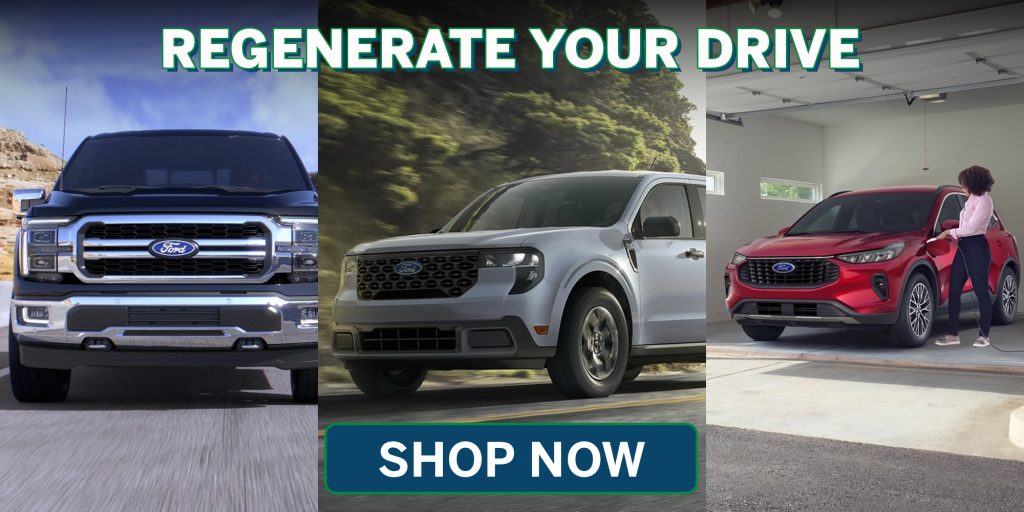
Storing Power For Later
At Wiscasset Ford, we’re proud to be at the forefront of automotive innovation, and few technologies are as impactful and often misunderstood as regenerative braking. As more drivers shift toward hybrid and plug-in hybrid vehicles, understanding how Ford’s regenerative braking works can help you get the most from your car regarding efficiency, performance, and sustainability. In this article, we’ll explore how the regenerative braking systems work so that you can better understand hybrid capability and choose for yourself whether they’re the right fit for your next vehicle. Visit us today in Wiscasset, ME!
What is Regenerative Braking?
Traditional braking systems rely entirely on friction. When you press the brake pedal, calipers clamp down on the brake pads, which press against the brake rotors. This converts the car’s kinetic energy into heat, which is then wasted into the atmosphere.
Ford regenerative braking turns that old model on its head. Rather than relying solely on friction to stop the vehicle, regenerative braking systems convert the vehicle’s momentum into usable energy. When you lift your foot off the accelerator or apply the brakes, the electric motor reverses its role and acts as a generator. This recaptures kinetic energy that would otherwise be lost and stores it in the battery for future use. In Ford hybrid and plug-in hybrid models, your vehicle can recover energy during city driving, in stop-and-go traffic, or when coasting downhill, all of which help extend the electric driving range and improve fuel efficiency.
Plug-In Hybrid Regenerative Braking: What Makes It Different?
The principles behind regenerative braking are similar across all hybrid and electric vehicles, but plug-in hybrids offer some unique advantages. Plug-in hybrid regenerative braking in Ford vehicles plays a critical role in extending the battery’s electric-only driving range.
Unlike conventional hybrids, which can only operate on electric power for short distances, plug-in hybrids like the Ford Escape Plug-In Hybrid can drive extended distances using electricity alone. Regenerative braking in these vehicles helps replenish the high-voltage battery more effectively, especially in urban environments. As plug-in hybrids rely more heavily on their electric motors, maximizing energy recovery through regenerative braking becomes even more important. This feature can make the difference between having enough battery charge to make your commute gas-free.
How Much Range Does Regenerative Braking Add?
The amount of range Ford regenerative braking adds depends on how you drive, the terrain, and how frequently you brake. In a Ford hybrid or plug-in hybrid, regenerative braking can contribute meaningfully to your battery’s charge, especially in stop-and-go traffic or during city driving. On average, you can recover anywhere from 10% to 30% of your energy through regenerative braking. For plug-in hybrids, this can translate to several extra miles of electric range over the course of a single trip.
For example, in vehicles like the Ford Maverick Hybrid or Escape Plug-In Hybrid, drivers who employ smart braking habits can see improved overall efficiency. If you’re descending a steep hill or navigating through traffic, the regenerative braking system captures a portion of that lost energy and stores it, helping extend your electric driving experience. While Ford regenerative braking won’t replace charging or fuel refills, it does provide a noticeable efficiency boost and allows your vehicle to work smarter, not harder.
Does Regenerative Braking Use Brake Pads?
In most scenarios, Ford regenerative braking provides the initial deceleration. This process doesn’t use brake pads at all, as it uses the electric motor to slow the vehicle by reversing its operation, meaning no friction, heat, or wear on your brake pads. However, when more stopping power is needed, such as during emergency braking or at very low speeds, the traditional friction brakes (i.e., brake pads and rotors) still kick in. Ford hybrids are engineered with a seamless integration between regenerative and friction braking systems, so you won’t notice the transition. This dual-braking approach improves efficiency and reduces wear and tear on brake pads. Many hybrid and plug-in hybrid owners report needing brake replacements far less frequently than those who drive conventional gas vehicles.
The Future Is Regenerative
Ford’s commitment to electrification is about rethinking how cars use and conserve energy, and Ford’s regenerative braking is one of the most essential tools in this mission. Whether you’re looking at hybrid cars with regenerative braking like a compact Ford Maverick, a family-ready Ford Escape Hybrid, or a plug-in powerhouse like the Ford F-150 PowerBoost, these vehicles can make a huge difference in how smart, cleaner, and more efficient you can drive. At Wiscasset Ford, we believe that understanding your vehicle is the first step toward making the most of your investment. If you’re curious about Ford regenerative braking or want to test drive one of our hybrid models, we’d love to show you how this innovative system works and how it can transform your everyday driving. Visit us today in Wiscasset, ME!
Connect with us


